Scaling Personalized Customer Success Without Growing the CS Team
Automate routine work to free CS teams for high-value relationships.
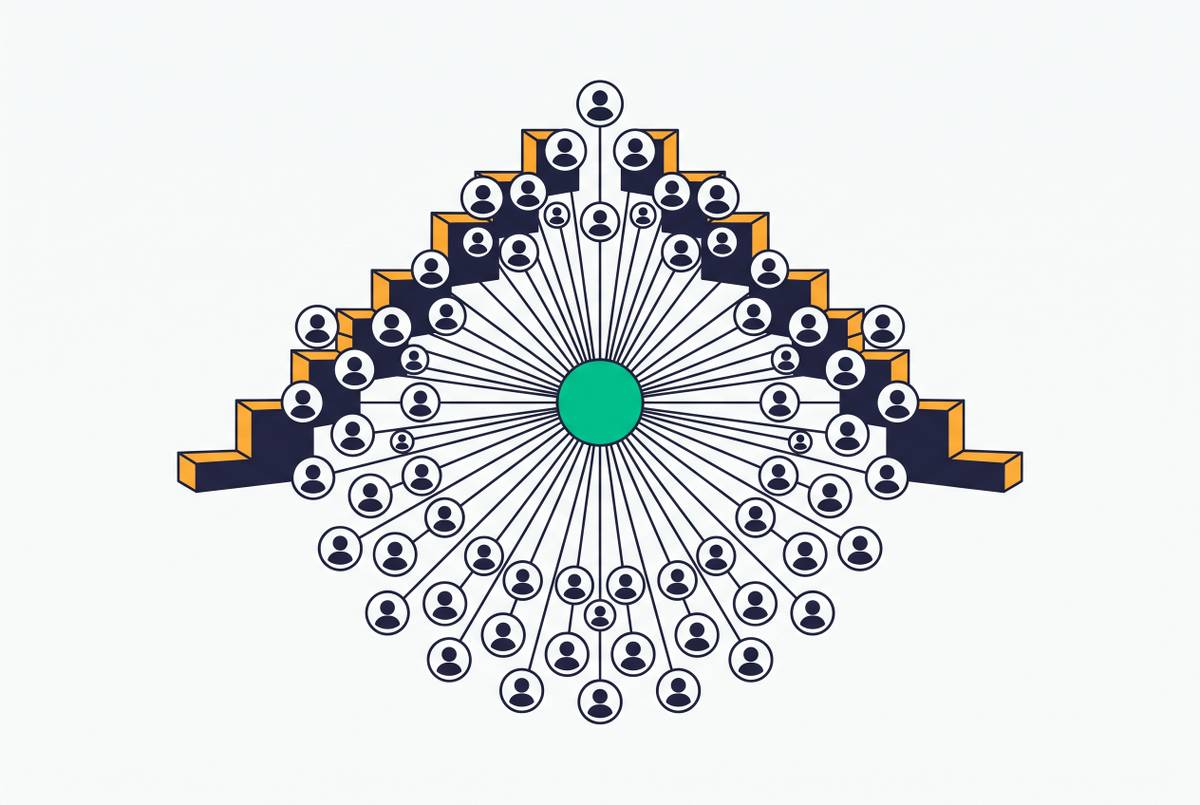
Revenue is supposed to compound. Headcount, under the default customer success model, scales in a straight line. That mismatch produces the structural problem underlying almost every scaling conversation in B2B customer success, and it eventually breaks under its own weight.
Each new cohort of accounts arrives with the same coordination overhead as the last one: kickoffs, status updates, milestone tracking, stakeholder nudges. None of that gets lighter because the CSM running it has done it fifty times before. TSIA's research on scaling customer success operations lists limited headcount as the first of several common challenges teams hit as they grow, and names the usual response directly: companies default to hiring more CSMs, a move that quickly becomes expensive and inefficient. The follow-up emails, the progress summaries, the meeting prep, none of that work compresses with experience. It multiplies with account volume instead, so a CSM who handled 30 accounts competently does not handle 90 accounts three times as well. They handle them worse, later, or never.
External pressure is tightening the same ceiling from the outside. Economic conditions now push companies toward efficiency over headcount growth. Investor scrutiny of net revenue retention has turned reactive customer success into a board-level risk. Customers, meanwhile, expect faster and more localized engagement than a linearly staffed team can deliver. None of this is a question of whether the current model needs to change. It is a question of how to change it without giving customers a thinner, slower, less attentive version of what they signed up for.
What "scaling without adding headcount" means
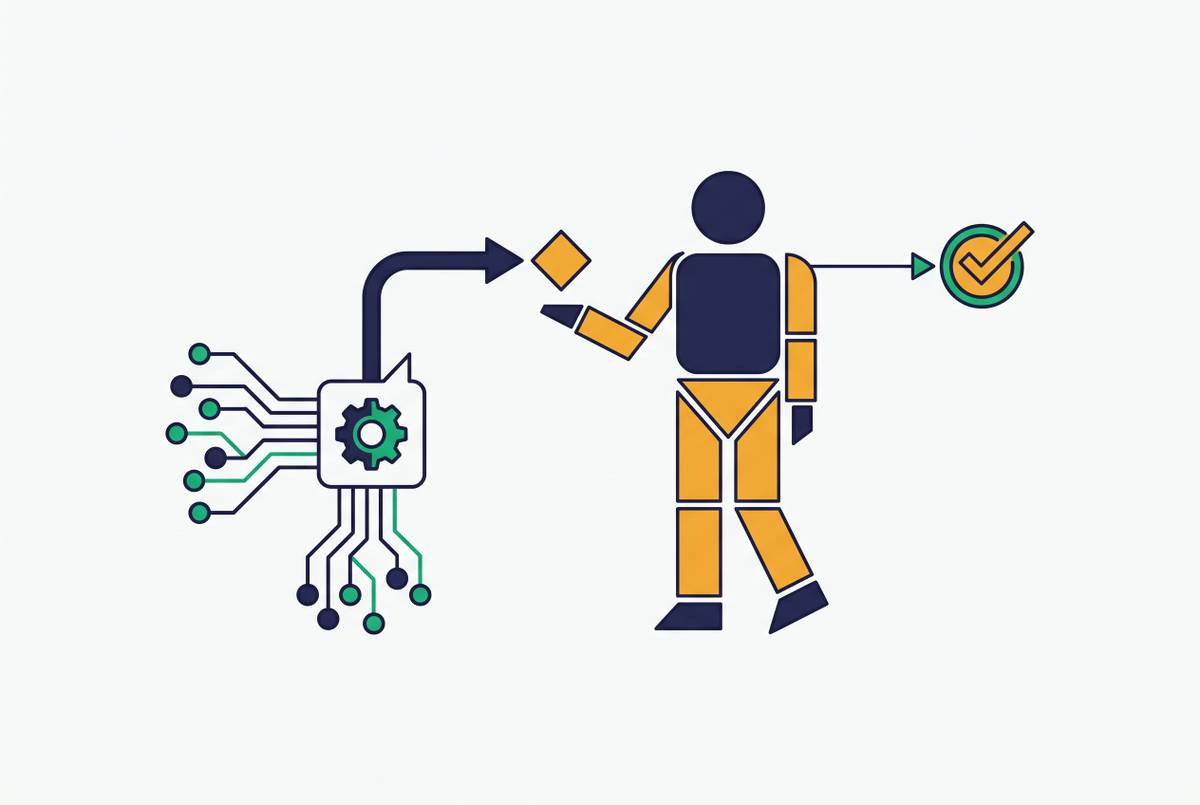
Scaling customer success without adding headcount means separating the work that requires a person from the work that does not, then building systems that handle the second category so people can concentrate on the first.
Call the first category the routine layer: coordination overhead, scheduled check-ins, milestone reminders, NPS surveys. None of it requires customer success expertise to execute correctly, it requires consistency. Call the second category the human layer: relationship moments, escalations, expansion conversations, the complex implementation problem that has no template. That work benefits from a person's judgment in a way the routine layer does not, and no amount of automation should touch it.
A model that only applies this separation during onboarding is leaving most of its value on the table. Scaled customer success has to run across the full post-sale lifecycle: onboarding, ongoing engagement, renewal, expansion. Confining the approach to the first 30 days treats a lifecycle problem as a launch problem, and the leverage that exists at renewal and expansion simply goes unclaimed.
There's a quality argument buried inside what looks like an efficiency argument, and it deserves to be named directly. When a motion is standardized and enforced by automation, every customer gets the same quality of engagement, regardless of which CSM they're assigned or how packed that CSM's calendar happens to be that week. Consistency, delivered this way, is a form of quality that a purely headcount-driven model structurally cannot offer, because headcount-driven attention always varies by who's available and how busy they are.
Why calendar-based outreach fails and behavior-triggered communication works instead
A message sent on day 14 because 14 days have passed treats every user as identical at that moment, regardless of what they've actually done. That's the root failure of calendar-based outreach, and it's also why it reads as automated even when a human wrote the copy. Behavior-triggered communication responds to what a specific person has done, or failed to do, which is the only information that actually predicts what they need next.
Four trigger types cover the full engagement surface a customer success team needs to track. Event-based triggers respond the moment a user completes, or fails to complete, a specific action, so the message lands while the context is still fresh. Time-based triggers catch idle periods, nudging a user before they disengage completely. State-based triggers fire when a user's account configuration or plan tier makes them newly eligible for something, surfacing it exactly when it becomes relevant to them. Risk-based triggers watch for usage depth dropping below a threshold, aiming to intervene before an internal decision to leave has already formed.
A product event updates a contact property, and that property change is what fires the outreach, across all four trigger types. The CRM or database becomes the single source of truth for where a user actually stands in their journey, not a calendar. Connecting current database state (who this person is, what plan they're on, what role they hold) with their behavioral history (what they've actually done over time) closes the gap between what should be happening for a user and what is actually happening. That gap is the signal to act on. An adoption-focused approach reads a customer's product usage and database state together rather than triggering purely on elapsed time or merging a name into a generic template, and writes guidance grounded in what that specific person has done, skipping outreach entirely when the evidence doesn't support it.
What behavior-grounded guidance looks like in an onboarding sequence
Onboarding is where behavior-grounded guidance has the highest leverage, because the trajectory a customer sets in the first days tends to carry through to renewal and expansion. Customers who reach first value quickly retain at materially higher rates and show stronger renewal intent than customers whose implementation drags, and the math on expansion downstream is shaped heavily by how this early phase goes.
A behavior-grounded onboarding cadence does not resemble a drip sequence once it's built out. On day 1, a user who hit the activation milestone gets a message that builds on what they just accomplished, while a user who got stuck before activation gets education targeted at the exact step where they stalled. On day 14, a human CS check-in fires only if the user has both activated and returned to the product multiple times since. Short of that bar, the intervention is automated re-engagement, not a phone call from a person whose time is better spent elsewhere. New features get introduced in context, at the moment a user first encounters them, rather than through a batch announcement email sent to the entire base regardless of relevance. Advanced capabilities surface only when usage patterns suggest a given user is ready for them, a progressive disclosure that builds up the feature set over time.
Qualia, the digital real estate closing platform, faced a concrete version of this problem after signing a major new partnership: onboarding capacity needed to double within three months, and it ultimately scaled to three times its original volume by year-end. Qualia did this without adding headcount, and the results included a dramatic reduction in time to go-live along with a 99% onboarding graduation rate at that tripled scale.
The gains here were not the product of one redesign. Onboarding improves through incremental iteration, small changes made consistently over months that compound into meaningful shifts in activation. The headcount implication follows directly: once an automated layer handles coordination overhead and routes the right message to the right person at the right time, human CSMs get freed to focus on the accounts where a relationship genuinely changes the outcome, not every account, every week, regardless of need.
Health scores and the decision to leave
Declining usage, a departed champion, or a stalled onboarding often appears on a standard customer success dashboard only after the buying committee on the other side has started evaluating alternatives. The customer success team ends up negotiating from a weak position, trying to win back a decision that's already been made, instead of intervening while the account was still winnable.
The signals that actually predict renewal and expansion are not the signals most dashboards are built to surface. Usage depth by feature shows whether users are reaching the parts of the product that deliver the value they're paying for. Breadth of adoption across the buying team shows whether engagement is concentrated in one power user or spread across the group that actually renews the contract. Time-to-value on new modules shows how quickly an account adopts new capability after it ships, which says a great deal about how engaged that account really is.
Most customer success teams already collect this data. It sits unused inside the product analytics stack, disconnected from any scoring model and disconnected from the outreach that would act on it. Rebuilding a health score to run on a better dashboard misses the point. The fix is rebuilding the score around usage patterns that actually track with the value a customer is getting, then tying each tier of that score to a specific playbook defining what happens next for an account that lands there.
Measuring eligible-cohort adoption and repeated successful use
Measurement needs to shift from activity to outcome. Logins, opened emails, and closed tickets describe what happened around the product. They don't describe whether a user's behavior inside the product actually changed as a result of the guidance they received, and that behavior change is the metric that actually matters.
Opens and clicks confirm a message was delivered. They say nothing about whether the recipient did the thing the message asked them to do. Eligible-cohort framing fixes the dilution problem that comes from measuring adoption across an entire user base: it measures adoption only among the people who actually qualified for a campaign and received the guidance.
Accounts and people are not the same unit, and conflating them hides risk. An account-level health score showing green can mask a single power user carrying three disengaged teammates on their back, while person-level adoption signals reveal that risk directly. A single activation event is not the signal that predicts retention. Repeated successful use is: a user who completes an activation milestone once and never returns has not meaningfully activated, whatever the dashboard says.
First-Time Value is its own measurement concept: the moment a user actually gets the thing they signed up for, inferred from behavior rather than from a form submission or a single logged event. It's a pattern that confirms value got delivered, not a checkbox. Observed adoption after a message goes out is useful evidence, but it is not the same claim as causal lift, and an honest measurement posture keeps that distinction clear: observed adoption is a signal to act on, not a result to claim credit for. A connected measurement system tracks time-to-first-value, onboarding completion rate by cohort, feature adoption depth, early-stage disengagement rate, and net revenue retention, with each of those metrics mapped to a specific intervention.
How AI adoption agents handle investigation and message-writing
An AI customer adoption agent reads a user's actual product behavior and current account state, decides whether that evidence justifies reaching out, and writes a message specific to that person, all without a human reviewing each case individually. That's the mechanism that makes personalized, behavior-grounded guidance possible at a scale manual customer success work never could reach, because the cost that used to block it, the investigation into each person's actual situation, no longer scales with headcount.
Traditional automation fires a fixed response the moment a rule triggers: the same message to everyone who meets the same condition. An adoption agent works differently. It investigates each eligible person independently, reads their specific product behavior and database state, and decides whether the evidence supports sending a message before it writes one. Skipping carries as much weight as sending, in this model. An agent that only sends when the evidence is strong enough produces outreach that feels warranted rather than automated, and frequency caps, quiet hours, never-contact flags, and skip-if-unsure logic all need to live at the moment of sending, not buried somewhere in a prompt.
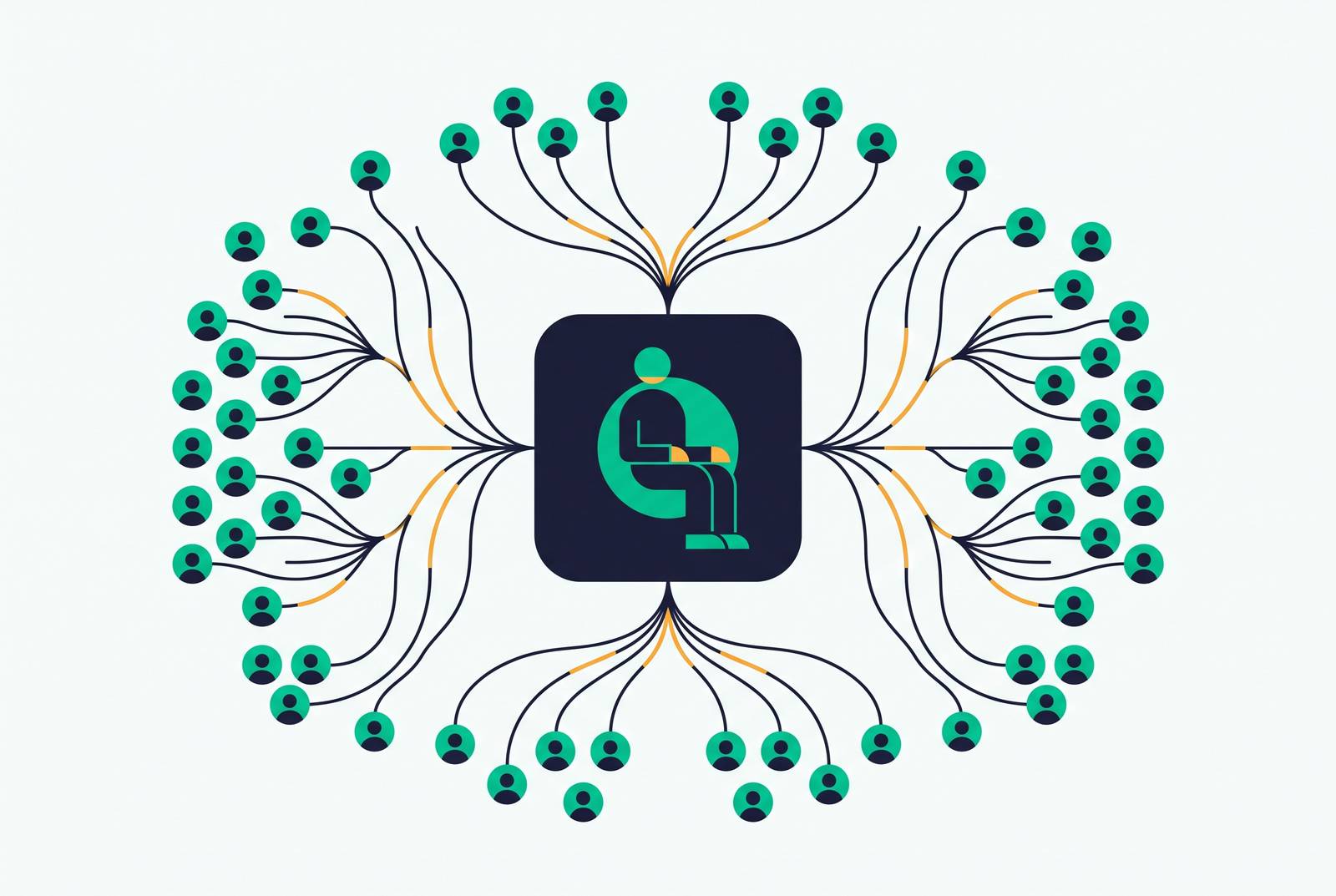
The campaign model is what keeps human control in place without requiring a human to approve every individual message. A person sets the goal, the audience, the guidance, and the limits once, and the agent exercises judgment within that approved scope on every case that comes through it. The outcome is a kind of attention that used to be reserved for a founder's first handful of customers, reading each one's situation carefully and writing something specific to it, now extended to thousands of people, because the cost of that investigation stopped scaling with the size of the base.
Userlens's Lumi is built on this exact principle. Lumi reads each person's raw product usage and current database state, writes the message that person actually needs, sends it inside guardrails a human sets once, and then queries product data to answer a single question: did behavior in the product actually change. The case for why this matters now is tied to how fast products ship. Every release creates a new cohort of users who haven't caught up yet, and an agent that continuously finds those users and gives each one specific guidance is one of the only mechanisms built to keep pace with that rate of change.
Prescriptive guidance versus descriptive analytics
An AI customer adoption agent and a product analytics dashboard answer different questions, and buyers evaluating tools in this space need to know which question they're actually trying to solve. Descriptive analytics tells a team what happened: which features got used, which accounts went quiet, where a cohort's usage dropped. Prescriptive guidance acts on what happened, generating and sending the message a specific user needs based on their behavior, without a human having to translate the dashboard into an action first.
A team buying descriptive analytics gets visibility. Someone still has to read the dashboard, decide what it means, and write the outreach, and that work scales with headcount the same way manual customer success does. A team buying prescriptive guidance gets the investigation and the message both handled inside the system, with a human setting the goal and the guardrails.
The right question for a buyer evaluating tools in this category is which platform closes the loop between behavior and action without requiring a person to sit in the middle of every case. Userlens sits on the prescriptive side of that line: Lumi doesn't just report that a user is falling behind, it decides whether to reach out, writes what that specific person needs to hear, and checks afterward whether their behavior in the product actually changed. That's a different category of tool than a dashboard that surfaces a risk score and waits for a CSM to act on it, and the distinction is the one worth asking about before signing a contract, not after.