Product Qualified Leads in Bottom-Up SaaS Growth
How product behavior reveals which free users are actually ready to buy.
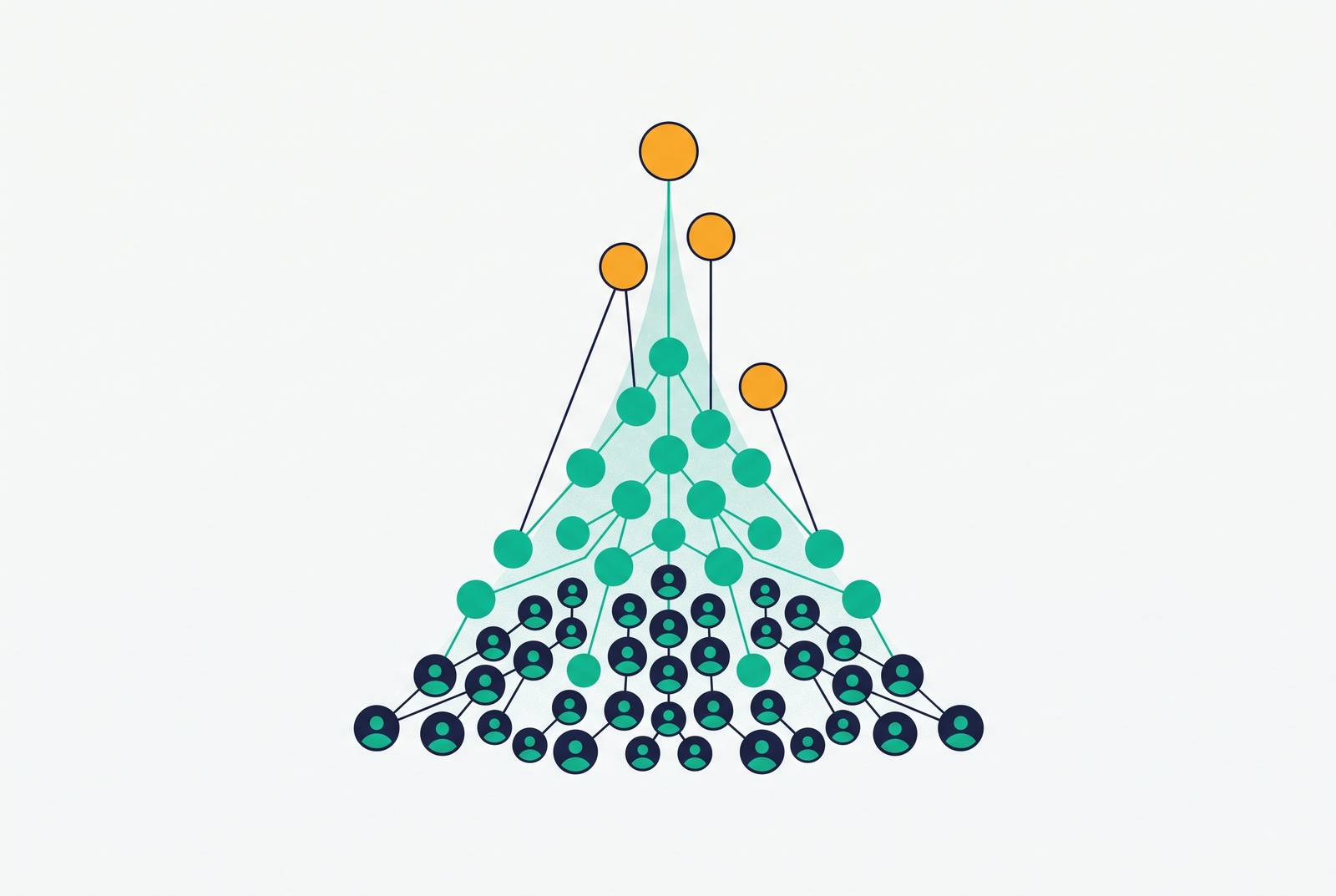
A PQL is a user who has gotten real value out of a free trial or freemium period, and whose in-product behavior says they're ready to buy. That's different from activation, the point where a user first gets what the product does for them. Most signups never even reach that point. A PQL sits well above it: the user isn't just recognizing value anymore, they're starting to depend on the product to do their job.
ProductLed's 2024 framework breaks a PQL into three signals. Fit measures whether the user matches the ideal customer profile: company size, industry, role. Value measures whether they've used the product enough to hit their aha moment. Intent captures the hand-raising behaviors: visiting the pricing page, inviting teammates, exporting data.
Most teams get this backwards, and it's worth saying plainly: point-accumulation models are the wrong approach. They feel more rigorous than a hard line, but points just rebuild the MQL trap with product data standing in for email data. A lead can rack up points for opening a release-notes email and clicking a link without ever touching the product in a way that proves value. A signup from a target-account domain who never logged back in doesn't qualify. Neither does a user scrolling a dashboard without ever building anything on it. A user either crosses the line or they don't; the binary is the point, not a decoration on top of it.
The concrete anchors make this easier to hold onto. Slack treats 2,000 messages sent as a marker of real team dependence. HubSpot looks at five or more features activated. Dropbox uses a single one-hour upload completed as its signal. None of these numbers are arbitrary; each ties back to an activation metric the company defined before it ever tried to define a PQL. The aha moment comes first, and the PQL definition follows from it, never the other way around.
The market context that makes PQL thinking urgent right now
Product-led growth used to be what early-stage startups tried when they couldn't afford a sales team. That era is over. A 2025 ProductLed study of more than 600 B2B SaaS companies found 58% had already put PLG in place, with adoption among companies above $50 million in ARR sitting close to universal.
Once product-led motion becomes the default across a category, a company still running MQL-only qualification is working from a slower, noisier signal than everyone around it. That gap compounds every quarter it goes uncorrected, and it doesn't announce itself. It just shows up later, as a longer sales cycle and a heavier CAC.
Here's the opening this creates: most companies running PLG motion still have no real measurement layer for spotting PQLs with any precision. They've adopted the strategy without building the plumbing underneath it, tracking signups and revenue but not the behavioral data sitting between the two. Teams that instrument behavioral signals well get a compounding edge. Teams that don't are flying blind in a market that's gotten a lot more crowded, able to see who signed up but not who's about to buy.
Why PQLs convert so much better than MQLs (and what the numbers actually mean)
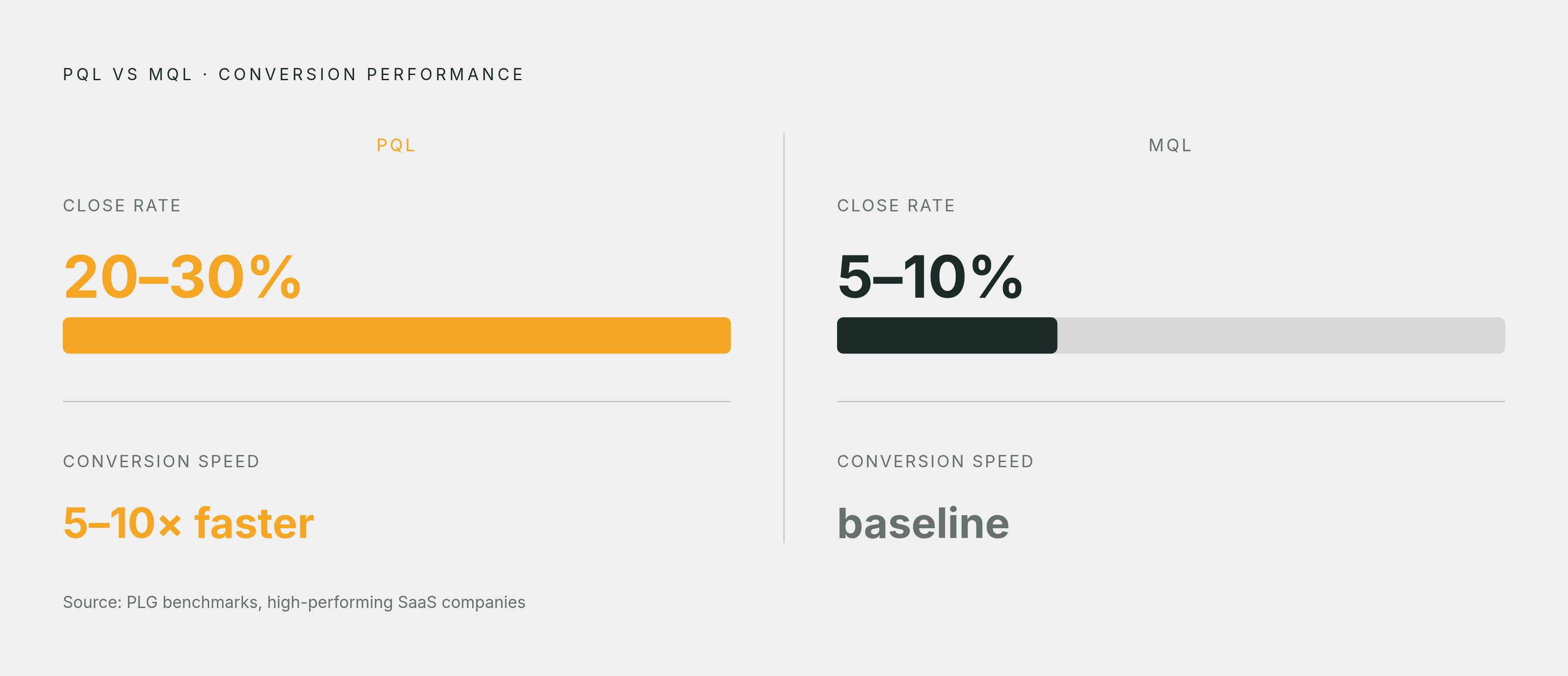
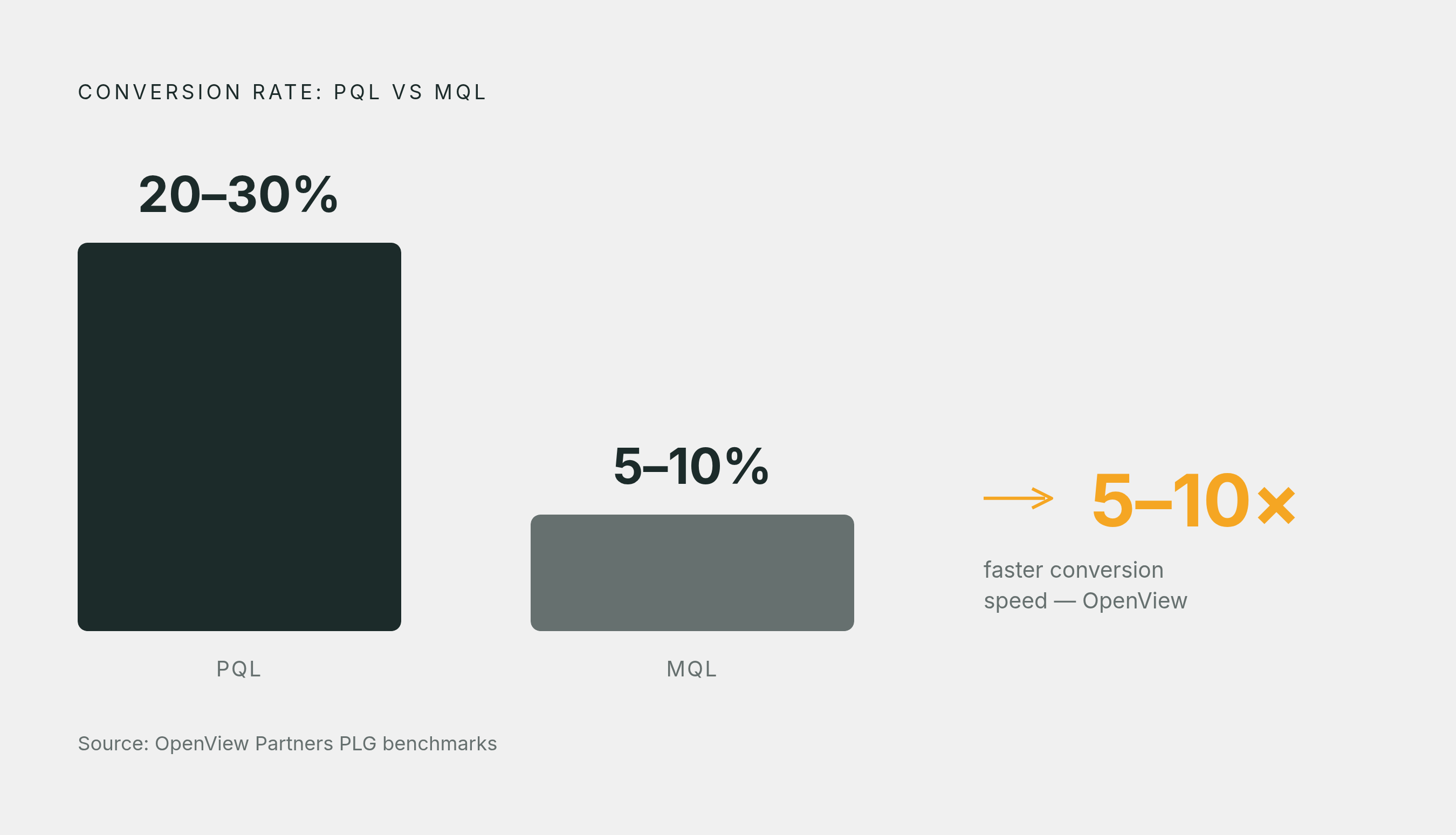
OpenView Partners puts the headline figure at five to ten times: that's how much faster PQLs convert relative to traditional MQLs. High-performing PLG companies close 20 to 30% of PQLs into paying customers, against 5 to 10% for MQLs.
The mechanism behind that gap matters more than the gap itself. A PQL has already internalized the value proposition through actual use before a salesperson says a word, so the sales conversation confirms a decision that's mostly already been made rather than trying to create one from scratch. That shortens the sales cycle, cuts down on objections, and takes weight off go-to-market spend. Self-qualification also means reps stop burning hours on people who were never going to buy.
None of this holds if the PQL definition is loose, and this is where most programs quietly fail. Set the threshold too low and the denominator inflates; the conversion advantage erodes fast once that happens. Widen who counts as "qualified" and the ratio bends back toward MQL territory, points and all. The whole number rests on the quality of the definition underneath it, nothing else. A marketing team under pressure to hit a lead-count goal is the most common reason that definition gets loosened, usually without anyone deciding to loosen it on purpose.
How to build a PQL scoring model from behavioral data
Three inputs feed a working PQL score. Engagement measures depth and frequency of in-product use: features touched, sessions logged, actions completed. Fit measures ICP alignment, usually firmographic data layered on top of the behavioral signal. Intent captures explicit signals: pricing page visits, upgrade prompts clicked, team invitations sent, API keys generated.
A common approach weights engagement most heavily, followed by fit and intent in roughly equal measure, then routes users above a defined threshold into sales outreach or a self-serve upgrade prompt. Between 50 and 69 sits in near-PQL territory, worth nurturing with messaging built around specific behavior instead of generic drip content. Below 50, forget conversion entirely. The job there is getting the user to activation first.
Building this needs three data sources working together: product analytics for what users actually do, CRM and firmographic data for who they are, and visibility into account configuration, what's been set up or turned on. Most teams have the analytics piece down cold. Very few have a clean join between that behavioral data and account-level CRM records, and scoring falls apart the moment those two sides stop talking to each other. That join, more than the weighting formula, is where most PQL programs actually break down.
Factoring in recency, frequency, and engagement depth gives a SaaS-native alternative to generic engagement scoring worth layering in. Scoring alone doesn't tell a team what to do next, though. An intent-stage map fills that gap, grouping users by where they sit in the journey from initial curiosity to active dependence, each stage carrying its own signals and its own next action.
Scaling PQL signals to the account level with Product-Qualified Accounts
One engaged user from a target company is a data point. Five engaged users from that same company in the same week is a buying signal. That distinction is the entire logic behind product-qualified accounts.
An account earns PQA status on a few things: the number of distinct users from the organization engaging within a rolling window, the breadth of use cases in play (one feature getting touched versus several), collaboration signals like team invitations and shared workspaces, and expansion signals like a team bumping against usage limits or asking about higher-tier features.
PQAs matter more than individual PQLs once enterprise motion enters the picture, because procurement, security review, and budget sign-off are account-level events. Triggering those needs account-level evidence, not one enthusiastic individual contributor. Cursor's growth arc shows this at scale: individual, product-led adoption pulled corporate buyers in behind it, and by the time the company crossed $1 billion in ARR, roughly 45% of revenue came from corporate buyers who had first entered through individual use. PQL scoring at the user level and PQA identification at the account level need to run side by side. Neither should wait on the other.
Why time-to-value is the hidden variable in PQL quality
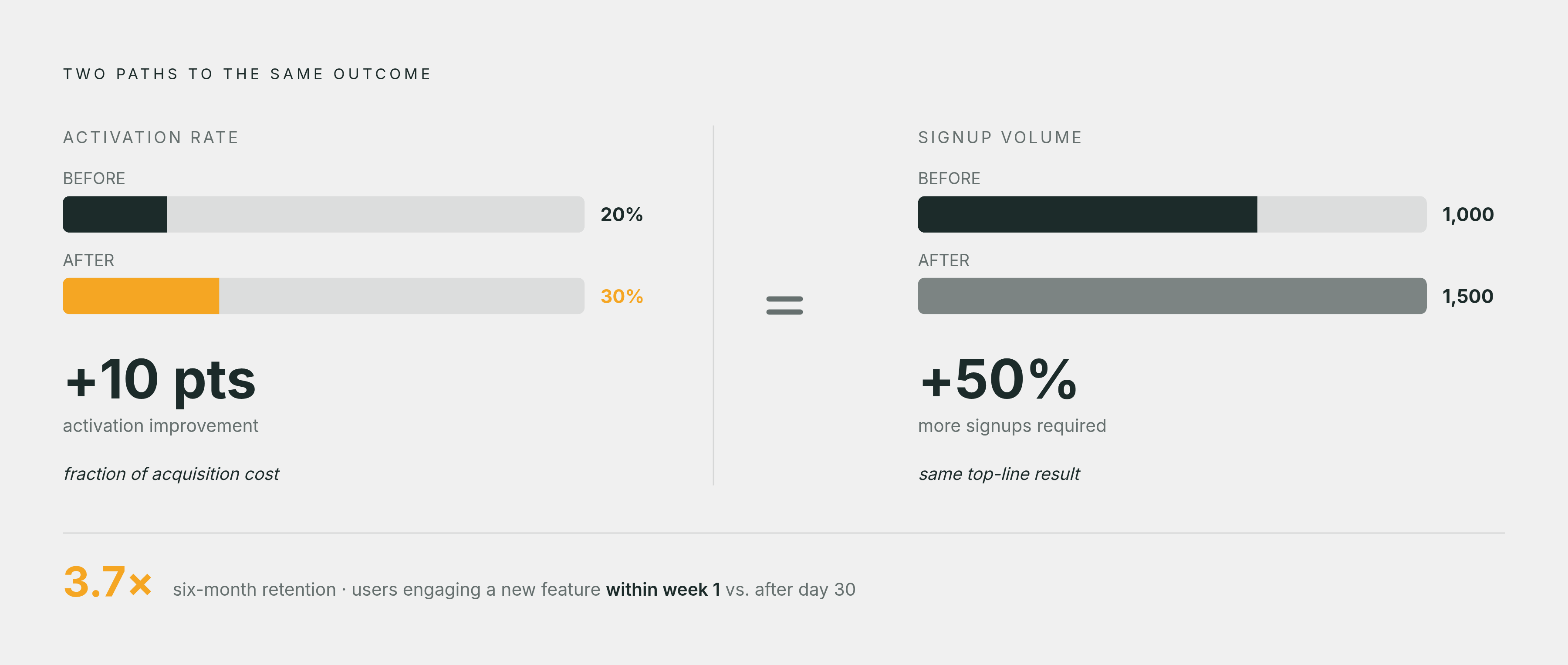
Activation rate is a lever most teams underuse, and it's the wrong place to be cheap. Pushing activation from 20% to 30% produces the same top-line effect as increasing signup volume by 50%, at a fraction of the acquisition cost. Time-to-value benchmarks reflect how tight this window needs to be: under an hour for B2B products, under ten minutes for consumer apps.
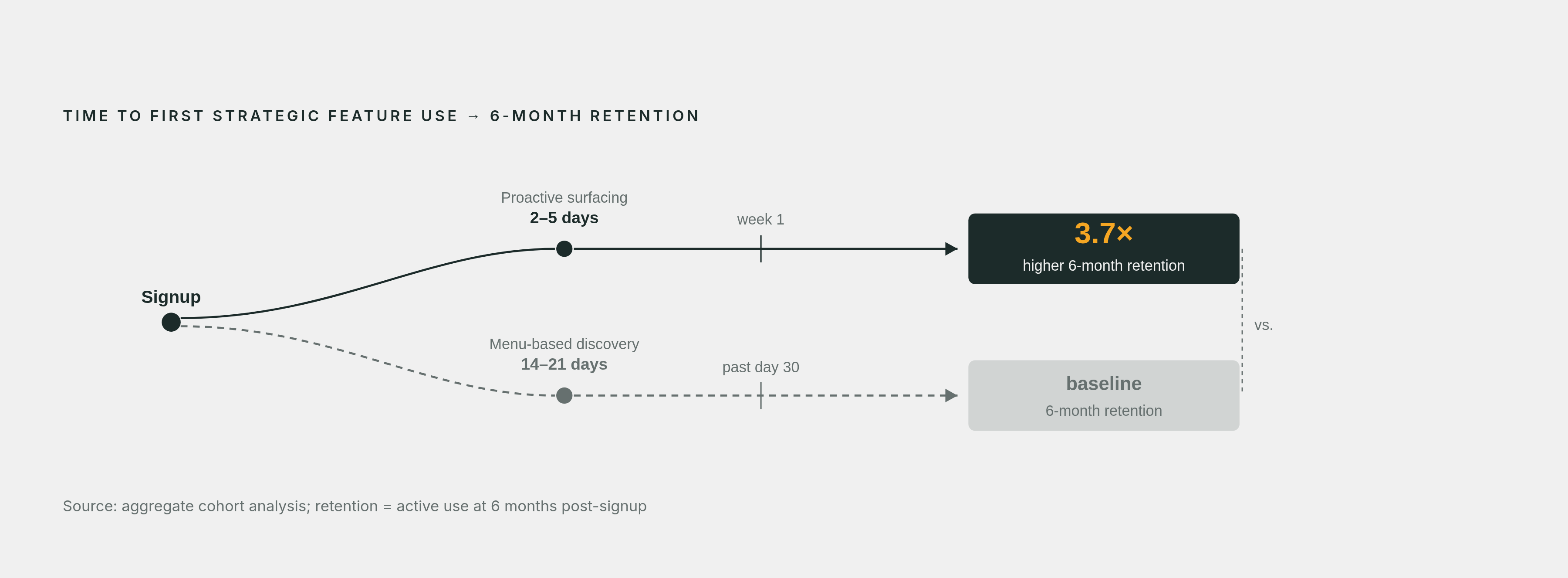
Delay carries a real cost, and it's the part most PLG teams underestimate. High-performing products get users to their first strategic feature use in two to five days. Products relying on menu-based discovery, where the user has to go hunting for value on their own, stretch that out to fourteen to twenty-one days. Reforge's product analytics database found users who engage with a new feature within their first week show 3.7 times higher six-month retention than users who delay past thirty days.
A user who becomes a PQL in week one and a user who gets there in week six aren't the same lead, even at an identical score. The week-one PQL converts better and sticks around longer. Most teams have no real read on whether their own PQLs are fast activators or slow ones, because almost nobody tracks time-to-value with any discipline. Cutting time-to-value carries direct weight on revenue and on the quality of every PQL the funnel produces.
Acting on PQL signals before a high-intent user goes cold
A PQL who hits peak intent and hears nothing back tends to resolve on their own, one way or another. Best case, they upgrade without prompting. More often, they quietly stop logging in.
Generic lifecycle emails fire on a calendar, not on behavior, and that's why they fail here. A template that ignores what a user actually did last week can't catch them at the one moment they're most receptive. What works instead is specific: role-based path branching off early behavioral signals, AI-generated next-step suggestions tied to a user's actual past actions, and reordering an onboarding checklist based on what someone has already done each drive gains in activation and feature adoption.
A decision-ready moment is a specific session, not a day of the week: the point where a user hits a usage ceiling, generates an API key, or invites a second teammate. Act there, not in Monday's batch send. Different PQL tiers call for different responses, and treating them the same wastes the signal. A high-score, lower-ACV self-serve PQL gets an in-product upgrade prompt referencing specific behavior: you've done this, here's what unlocks next. A high-score, high-fit account gets routed to a sales rep with a behavioral summary attached, so outreach references actual actions instead of a vague "we noticed you've been active." A near-PQL gets targeted content or in-app guidance aimed at the specific activation gap still standing between them and the threshold.
Every nudge needs a defined behavioral outcome before it fires. Did usage actually change afterward? That's the question that closes the loop, more than open rate ever could.
Where PLG-only motion hits its ceiling and hybrid models take over
Pure self-serve motion hits a wall before $50 million in ARR, and no amount of scoring sophistication moves that wall. Enterprise buyers need security reviews, custom contract terms, and executive sign-off, none of which a self-serve flow produces on its own. Most PLG companies layer in a sales-assist motion somewhere between $10 million and $50 million in ARR, once that ceiling starts to show.
The PQL model shifts at this stage rather than getting replaced. Individual PQL signals start triggering human outreach instead of just automated in-app prompts, and PQA signals become the primary input feeding account executives their pipeline. Conversion targets shift too: sales-assisted PQLs should convert at 25 to 35%, with CAC payback under twelve months, while full enterprise motions can run 18 to 24 months on payback but deliver far higher lifetime value in exchange.
Here's the harder truth underneath all this: most PLG efforts fail, and the model itself is rarely the reason. The failure traces back to a structural gap. PLG needs the whole company to restructure around it, and most teams treat it as a tactic that lives inside marketing or sales rather than an operating model the entire company runs on. That's a company-design failure more than a scoring failure. Cursor's trajectory, moving from $500 million to $2 billion in ARR in roughly nine months, shows the hybrid arc at its most extreme: individual adoption pulling corporate procurement behind it, PQL escalating into PQA at real speed. Scoring and routing logic built for pure self-serve needs to extend into sales-assist without a rebuild. Design for the hybrid motion from day one, not as a retrofit two years in.
Building the operational infrastructure to run PQL identification continuously
PQL scoring sits at the intersection of product analytics, marketing automation, and sales routing, and no single team owns all three. That's exactly where high-intent users fall through the cracks: in the gaps between systems that were never built to talk to each other.
The data stack needs a few things working at once: product analytics that capture event-level behavior, not just page views; firmographic data that scores fit without someone doing manual research on every signup; a real mechanism for joining behavioral data to account records inside the CRM; and alerting or routing logic that fires the moment a threshold is crossed, not on a weekly batch job. None of these pieces work alone. A firmographic layer without behavioral data tells you who someone is but not whether they're close to buying. Behavioral data without the CRM join tells you what's happening but not who to call.
Running PQL identification all the time, rather than pulling a report once a quarter, is what turns the framework from a slide deck into something the business actually runs on. Userlens, an account intelligence platform that reads each customer's product usage and database state to write that person a grounded next-step message and then checks whether their behavior in the product actually shifted, is one tool built for exactly that continuous loop.