Identifying Underadopted Features Worth Rescuing vs Retiring
Diagnose low adoption by separating discoverability failures from value failures.
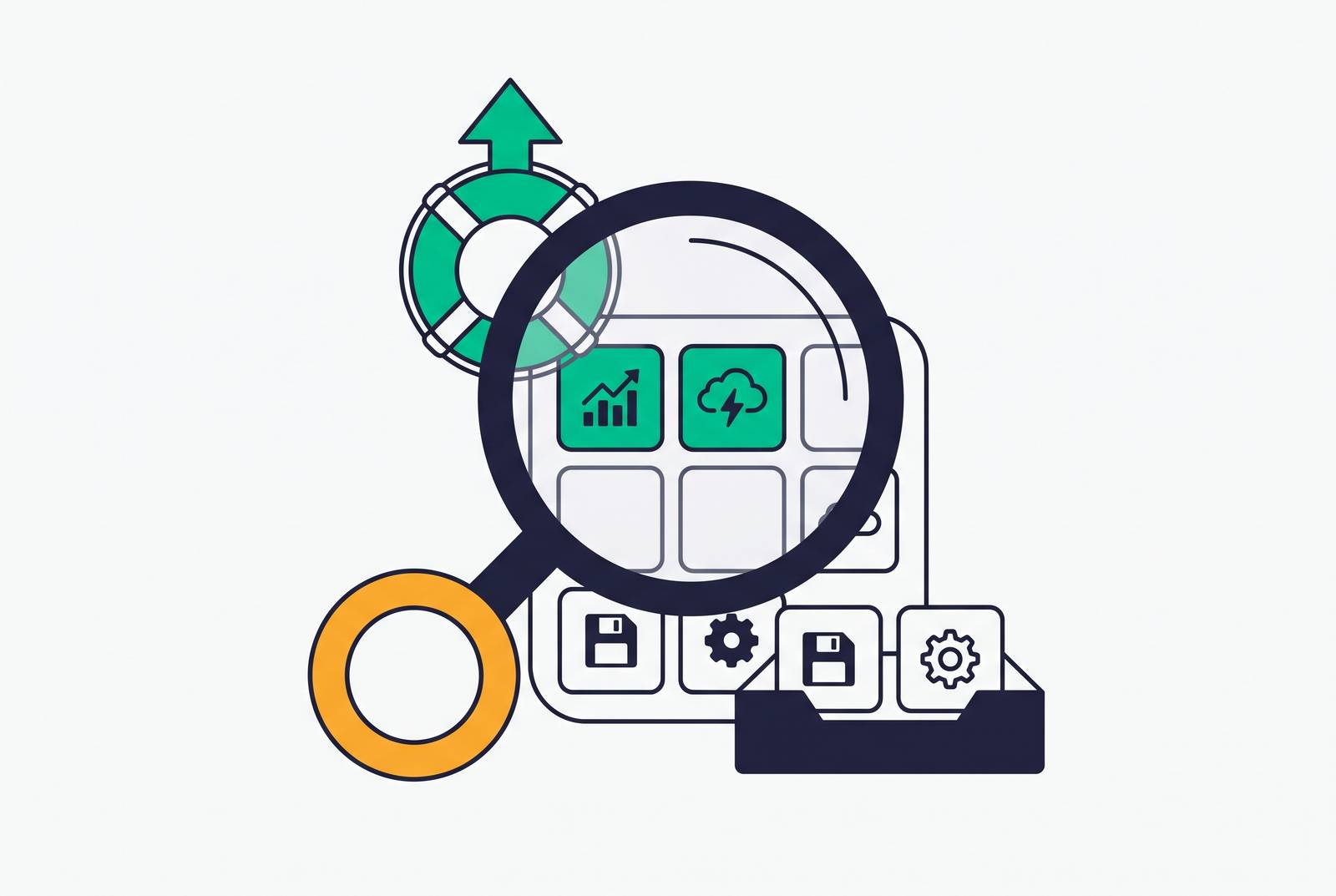
To decide which underadopted features to rescue or retire, teams need to look at current account state and actual behavior over time together. For B2B SaaS teams, feature adoption software is useful when it connects who can use a feature with who tries it and returns. Rescue features when eligible users need help finding value that others have already found, and retire implementations when users reach them but still show no repeat use.
Why the rescue-or-retire decision is harder than it looks
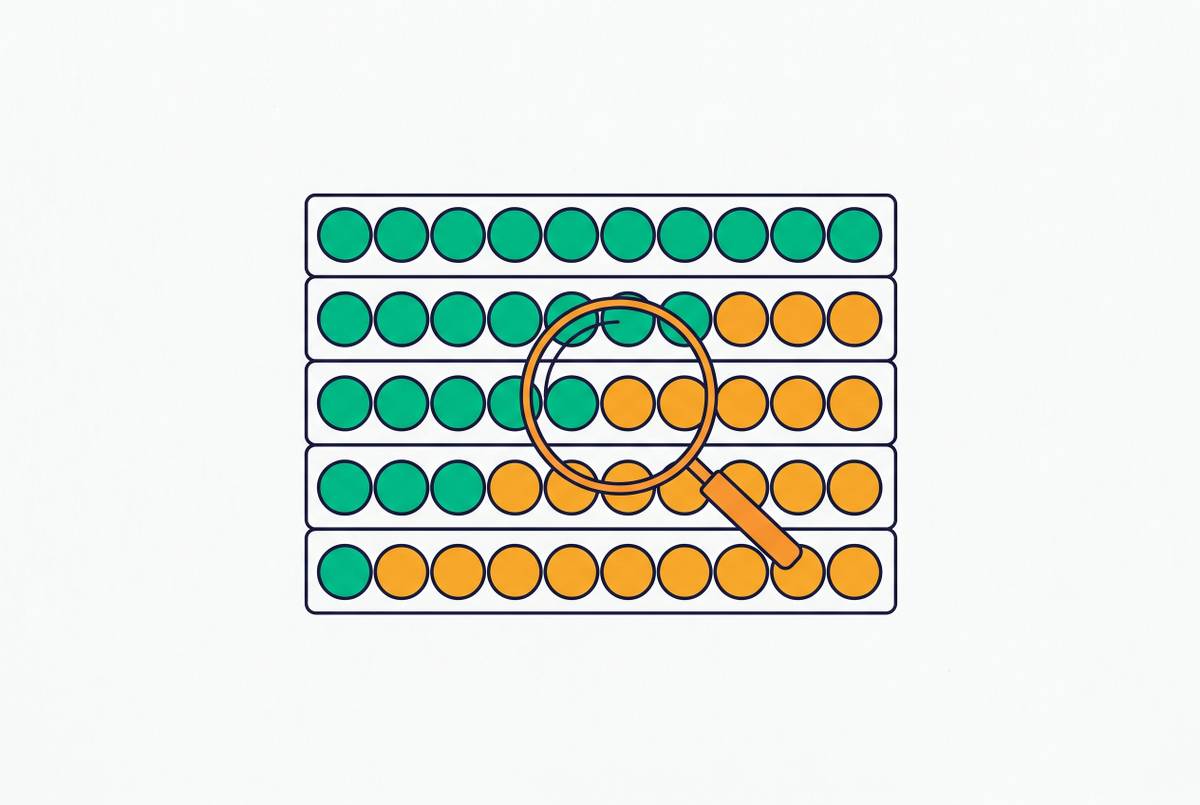
Products keep shipping, but users do not automatically follow. A release lets people use a capability, but that alone says nothing about whether it becomes part of someone’s work. The path has distinct stages, which are exposed, activated, used, and used again. Only the last stage establishes adoption.
That gap makes a low adoption number hard to act on. It cannot tell a team whether users never found the feature, found it and left, or were never eligible for it. Those cases can look alike on a dashboard but call for different decisions. Guessing wrong means either killing something useful but underexposed or spending another sprint promoting something people have already rejected. The decision therefore starts with locating the failure.
Why aggregate adoption rates hide the real signal
Consider a feature available only to admins on paid plans. Dividing its users by everyone who logged in includes free-plan users and people whose roles give them no access. A low rate built on that base understates uptake among the people who could actually use it.
The useful unit, eligible-cohort adoption, is users who actually used the feature divided by users who were eligible and exposed to it. Eligibility and exposure must remain distinguishable within that analysis. Otherwise, a calculation limited to exposed users can describe what happened after discovery while leaving the discovery gap out of view. The team needs to know both who could reach the feature and who actually encountered it.
Power users on a top-tier plan and new users in their first two weeks do not necessarily face the same barrier. Combining them can conceal strong repeat use in one group and no activation in another. A general effort to “improve adoption” has no precise target in that situation. The denominator disciplines the question before the team tries to answer it.
The diagnostic fork: discoverability failure vs. value failure
First, check whether activation among eligible users is low. If it is, the working diagnosis is a discoverability failure. Users who could benefit are not finding or reaching the feature. The appropriate response is better exposure and navigation, including in-app guidance, contextual triggers, or changes to where the feature appears. Redesigning the feature itself does not address that barrier.
Second, check whether activation is adequate but repeat use is absent. If users reach the feature, try it, and do not return, the working diagnosis is a value failure. The first interaction did not give them enough reason to make the feature part of their workflow. Another announcement or more tooltips does not solve that problem because discovery already happened. The intervention belongs in the first-use experience or workflow integration, with retirement becoming an option if that work fails.
A blocked task needs a more specific response within the value branch. Users may want to finish but be unable to do so, making technical repair, in-app hints, or better self-help more appropriate than outreach. Time-to-first-value provides a crosscheck on the diagnosis. A long delay followed by high eventual adoption points toward a discovery bottleneck, while a short delay paired with low adoption points toward a value bottleneck.
How account state and behavior together sharpen the diagnosis
Current account state establishes who belongs in the analysis. Whether a person is eligible depends on their plan tier, user role, configuration status, and feature flag. Those fields do not show whether the person tried the feature or why use stopped. Behavioral history shows that missing sequence: activation, first-use depth, and repeat use in the periods that follow. Neither source answers the decision on its own.
Together, they expose the gap between what could be happening and what is happening. An eligible user with the right role and configuration but no activation presents a different case from someone who completed a meaningful action and never returned. The same distinction applies within accounts. An account whose admin is configured but whose users have not activated differs from one where a single power user has adopted the feature. The account-level rate alone does not explain either pattern.
Userlens combines current database state with behavior over time, making this investigation possible at the person level. For example, a feature that seems to have lost its users overall might have strong repeat use in a high-tier cohort and zero activation in a free-tier cohort. Plan state establishes whether that second group even belongs in the denominator. The connection between eligibility and behavior becomes useful only when the team has defined the workflow-specific behavior that counts as adoption.
Building the rescue case: what justifies intervention
The case for rescue starts when activation is low among eligible users, but those who activated keep using the feature in ways that count. That combination shows the feature works for people who reach it. That case is stronger when accounts with that plan tier or role bring in revenue or have room to grow. It also needs a supported workflow that addresses a problem the account actually has. Configuration and role establish the opportunity, while absent behavior identifies the gap.
Without those conditions together, rescue can become a way to avoid a harder decision. Keeping a feature should take more than a sense that sending guidance is easier than removing it. The evidence must show an audience worth reaching.
Where that evidence exists, the intervention should be contextual guidance delivered when the user is in the relevant workflow. A broadcast to the entire user base ignores the distinction the diagnosis just established. The strongest objection is that some underadopted features simply are not valuable enough, however clearly they are explained. That objection is valid for value failures, but not for features with demonstrated repeat use among activators. A defensible rescue process therefore needs an equally defensible retirement branch.
Building the retirement case: what justifies sunsetting
The case for retirement starts when eligible-cohort adoption is low and even people who did activate show little repeat use. Here, users have had a chance to find value, but the behavior does not support keeping the implementation as it stands. The signal strengthens when feature use has no statistically meaningful correlation with account retention in that cohort. The case is stronger when a feature takes a lot of support and maintenance for how little it gets used. So does the absence of any segment, by plan, role, or account type, where adoption and retention both hold.
Compare feature adoption among accounts that stayed past an early retention milestone. Features below the team’s adoption threshold, with no retention correlation, are where the retirement list starts. That threshold must be explicit, but the framework does not supply a universal cutoff.
Retirement is not a verdict on the people who designed the feature. It is a conclusion that this implementation does not solve the problem for enough users to justify its cost. Removing low-adoption surface area can accelerate release cycles and reduce the cognitive load on users trying to find what they need. Those gains belong in the decision. The need may still call for a different solution even when further work on the current feature would not be worth its cost.
Translating the diagnosis into a specific next action for each case
A discoverability failure with value confirmed among activators calls for targeted rescue. Reach eligible non-activators with guidance grounded in their behavior, then measure eligible-cohort activation in the next period. If users instead run into trouble during first use, redesign that workflow before reaching out to more people. Re-diagnose after the fix ships rather than assuming the original classification still holds.
If repeat use never takes hold even when first use goes well, retire the implementation and record the unmet need so it can be considered for the roadmap later. If users are abandoning a task they want to complete, repair the technical problem or improve self-help. Task-completion rate is the relevant measure for that repair. These actions differ because the missing behavior differs. Treating them all as messaging problems wastes the evidence collected during diagnosis.
The same distinction helps B2B SaaS teams choose feature adoption software. In-app guidance helps when users struggle to find or navigate to a feature inside the product, while analytics helps show where behavior breaks down. When the need is personalized outreach based on eligibility and behavioral history, the execution layer must connect those signals to a message decision. For example, Lumi from Userlens starts with an adoption goal and qualifying audience, then investigates each eligible user before providing personal guidance. Its personalized email capability is relevant to that rescue loop.
A human approves the campaign’s goal, eligible audience, guidance, and send limits. After the individual investigation, a message is warranted if the evidence justifies it, and otherwise the user should be skipped. That judgment prevents a targeted campaign from becoming a broadcast to every non-activator. After sending, the meaningful result is changed product behavior, including activation, return use in the next period, and repeat use among the rescued cohort. Opens and clicks do not establish that the feature became useful.
What this framework requires from your data model before you run it
The practical prerequisite is a connection between two sources most teams already have. The database has current account state, and product analytics has the history of what users did and when they returned. What is usually missing is the join at the feature-and-user level. Without it, the evidence used to judge adoption is kept apart from eligibility. Connecting those records makes the diagnostic fork available without requiring a new tracking plan.
Shared definitions matter just as much as the connection. Product, growth, and RevOps need to agree on activation and on the specific behavior that counts as adoption for each feature before calculating rates. A generic engagement proxy cannot replace a criterion grounded in the feature’s actual workflow. Otherwise, teams can use the same records and still disagree on whether to rescue or retire a feature. Agreement makes the decision reproducible.
The reasoning must also be auditable. For any person messaged or skipped, the team needs to explain which state and behavior justified that choice. This is the standard to apply to a tool such as Userlens as well as to a team’s own connected analysis. It keeps automated guidance tied to evidence so that it does not become noise. The rescue-or-retire decision is available when existing state data and behavioral history meet under a shared definition of adoption.