Viral and Collaborative Loops in B2B SaaS Products
Distinguishing viral loops from collaborative loops unlocks sustainable product-led growth.
Viral loops and collaborative loops both get filed under "PLG," but they pull growth through different doors, and treating them as interchangeable is where product teams burn a year of roadmap. One reaches outside the customer's organization and puts the product in front of someone who has never touched it. The other spreads inside an account, from one user to the next, and gets more valuable with every teammate who joins. Build both without knowing which is which, and the product plateaus at whatever headcount marketing can afford, mistaking activity for compounding. Get the sequencing wrong, and no amount of clever share-mechanic design fixes the underlying problem.
Forrester found in 2024 that B2B buyers complete nearly 83% of their purchase journey before they ever speak to a salesperson. Most of the decision happens without a human in the room, which means the product itself has to do the convincing, and the mechanics of how it spreads matter as much as anything on the roadmap.
How external viral loops are engineered into product outputs
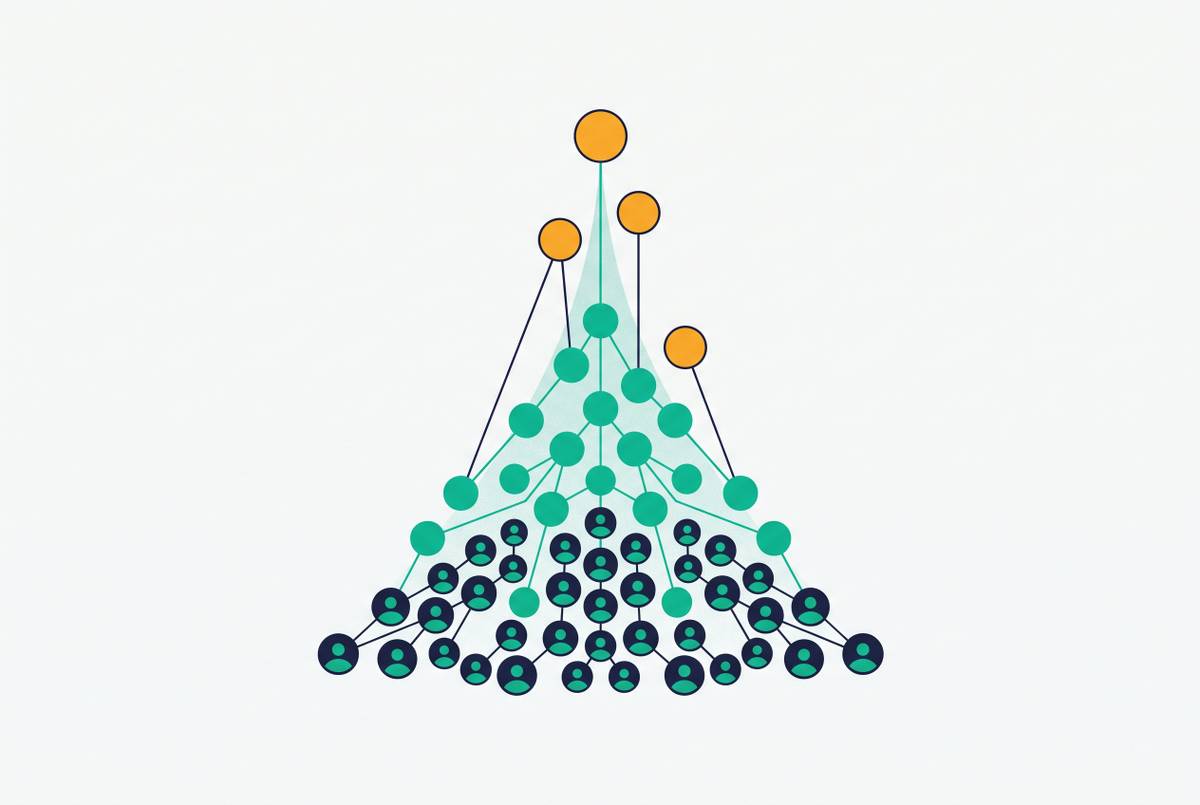
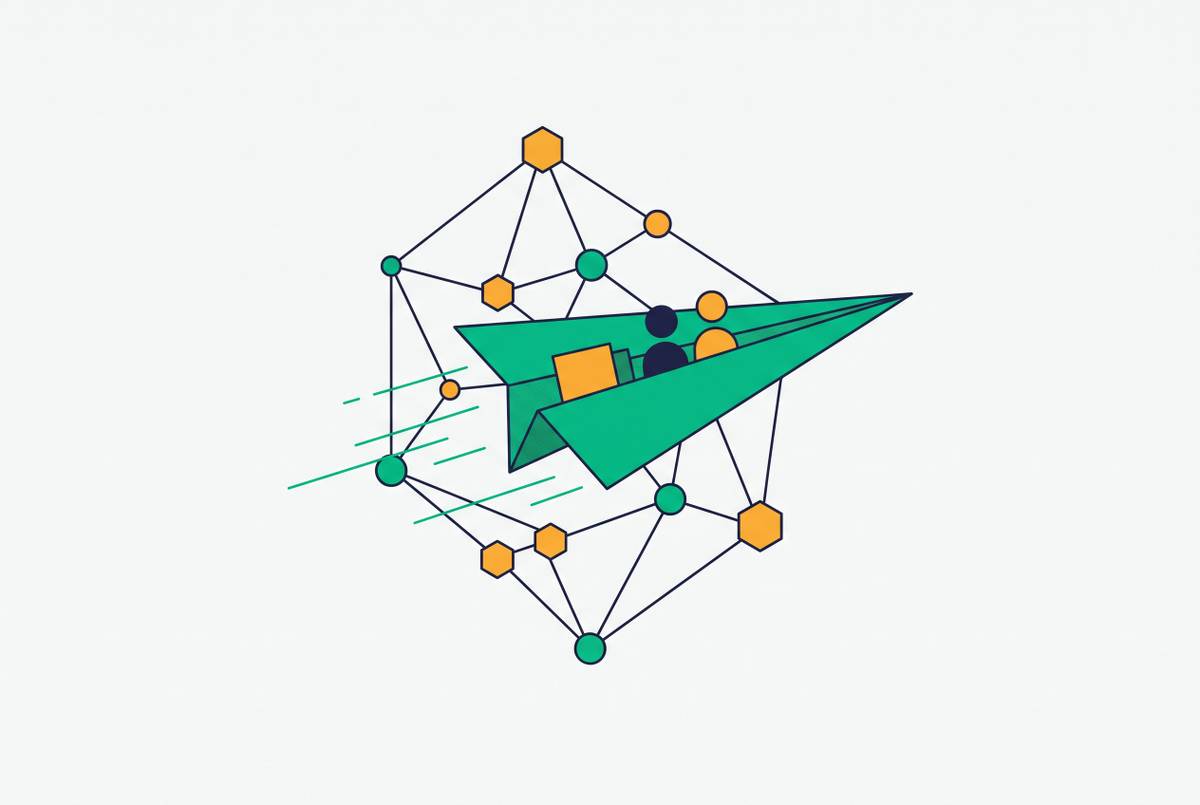
External virality has one triggering condition: something the product makes leaves the product and lands in front of someone who has never used it. A Calendly link dropped into an email. A Notion page pasted into Slack. A form built in Tally and sent to a hundred people who have never heard of Tally. Each moment puts a non-user face to face with the product before any marketing budget touches them.
Three things have to be in place for that to happen reliably. A shareable output has to visibly carry the product's identity, such as a link, a badge, or a watermark, something that tells the recipient what made this. The sender needs a reason to share that has nothing to do with the vendor asking nicely, because the share finishes their own task rather than doing the vendor a favor. And the recipient needs low friction going in: value delivered before anyone asks them to create an account.
Calendly is close to the cleanest version of this. Every booking link a user sends is a touchpoint with someone who is not yet a customer, and it costs nothing per share, no ad spend, no outreach. Tally.so runs a similar mechanic through its "Made with Tally" badge, stamped on every form; the form is the product experience for the person filling it out, and the badge does quiet, constant introduction work in the background. Tally reached over 500,000 users and roughly $2 million in ARR on that mechanic and word of mouth, without much else behind it.
Mintlify works the same way in developer tooling. Documentation hosted through Mintlify carries the company's identity wherever engineers share docs: on GitHub, in Slack channels, in onboarding guides for other companies' products. The company has said it reached over $1 million in ARR with reach into more than 100 million developers, largely because the docs themselves are the distribution channel.
RB2B does something slightly different. Its JavaScript install identifies site visitors and pushes alerts into the customer's Slack as the primary product. But the alert gets shared inside the buyer's team, sales sees it, marketing sees it, and that secondary spread inside the account has helped push the company toward nearly $5 million in ARR. Wispr Flow leans on a more human version of the same idea: people demonstrate voice-to-text speed in front of coworkers, post about it on LinkedIn, and that visible productivity gain has reportedly driven something like 40% month-over-month user growth.
Dropbox's referral program gets cited in the same breath as these examples, and it shouldn't be. Dropbox incentivized sharing with extra storage rather than building sharing into the workflow itself, and it worked, growing from 100,000 to 4 million users in about 15 months. But that is an incentive bolted onto the product, not a loop native to the output. Confusing the two is exactly how teams end up building referral programs when what they actually need is to redesign what the product hands the user to share in the first place.
The test for whether any of this holds together is simple: does each cycle produce at least one new sharer? A loop that converts recipients into users but never gets those new users to produce their own shareable output is leaking, no matter how good the conversion number looks in isolation.
How collaborative loops work inside an account, and why they compound differently
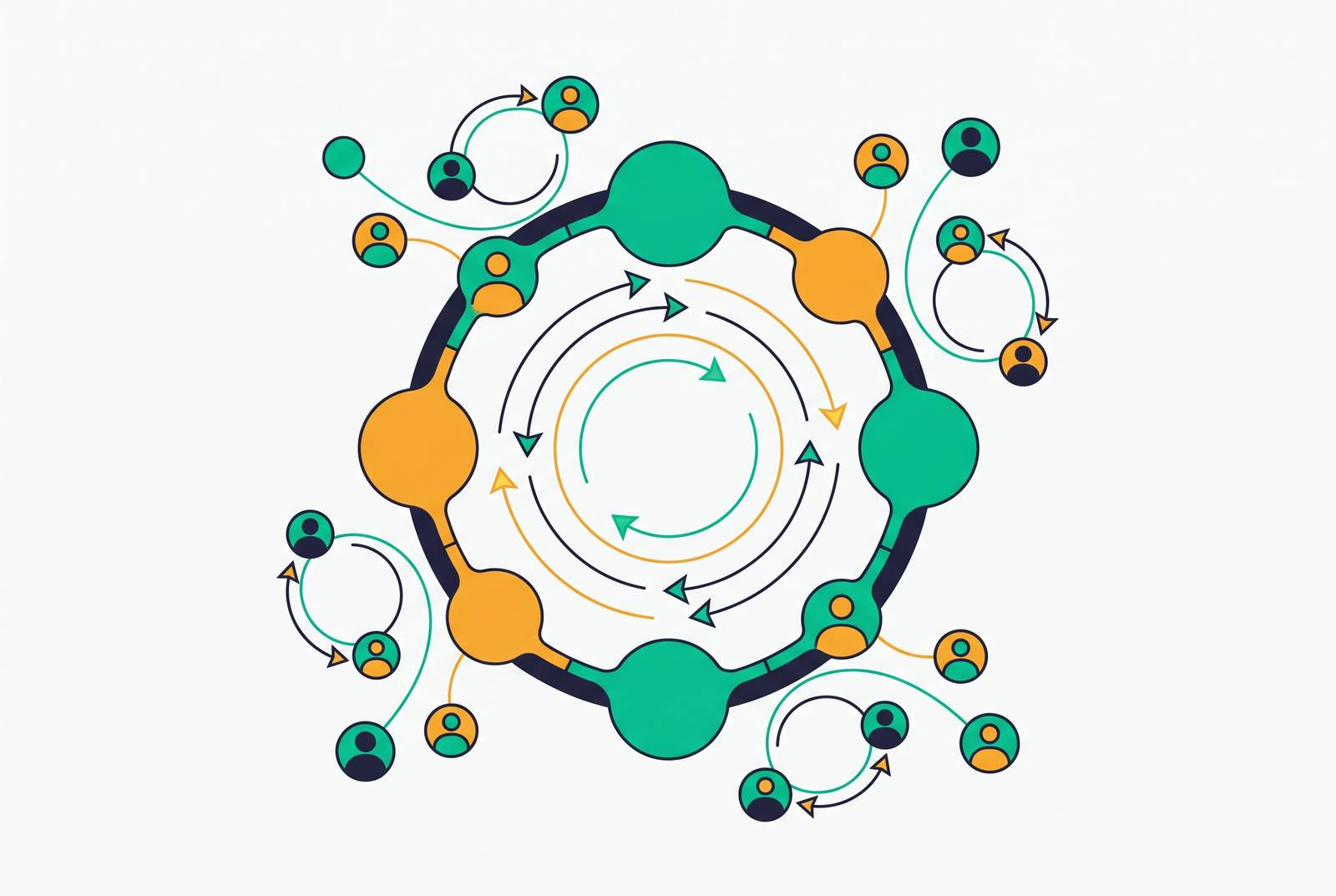
Collaborative loops don't need anyone outside the company to see anything. The product gets more useful to person A the moment person B joins, and the pull toward B originates from A's own behavior in the tool, not from a campaign. Inviting a teammate, assigning a task, sharing a document, requesting a review: each is a product action and a recruitment event at once, and each adds a potential revenue unit without adding to customer acquisition cost.
Slack is the textbook case. Team chat is worth almost nothing to one person and worth a great deal once the whole team has moved in, so the freemium model let teams pile in at zero cost and let the product do the convincing. The message history limit, first capped at 10,000 messages and later loosened to a 90-day rolling window in September 2022, gave teams a natural moment to hit a wall and convert. By 2024, Slack was reporting 38.8 million daily active users. Slack Connect then took the same mechanic across company lines, linking agencies to clients inside the same channels and cutting email out of the loop entirely, stretching what had been a purely internal mechanism into something closer to the external kind.
Asana runs a quieter version. Assigning a task to a new teammate is the invitation; there's no separate "invite" step that feels like onboarding, because the task itself pulls the person in. As the task graph grows across more people, the switching cost for the whole account climbs right along with it.
Granola, the AI meeting notes tool, lets users manually push summaries into Slack channels on its Business and Enterprise plans, and that shared artifact becomes the reason a non-user in the channel starts asking for their own account. The company has reportedly reached a $250 million valuation on the back of that kind of internal spread. Tana uses its Slack community to circulate pre-built templates, doing the same work quietly: someone sees a colleague's template, wants the same setup, and adoption compounds through the community instead of through a sales deck. MailMaestro drives expansion the same way, watermarking shared email templates so a template built by one person becomes a visible invitation to the next, and the company says it has been adopted by teams totaling more than 55,000 users.
What makes this loop compound differently is that it does two things to the same account at once. Each new user raises the value of the product for everyone already in it, and simultaneously raises the cost of ever ripping the product out. That's expansion revenue and retention generated by the same mechanism, which no marketing channel replicates on its own.
Datadog's land-and-expand motion is the enterprise-scale version of this pattern. A developer adopts one monitoring product on a cheap or free tier, and the collaborative pull inside engineering teams drags the account into the broader observability platform over time. That motion helped produce $3.4 billion in revenue for fiscal year 2025, up 28% year over year, and the company counted 603 customers paying $1 million or more in ARR by the third quarter of 2025, up from 462 a year earlier.
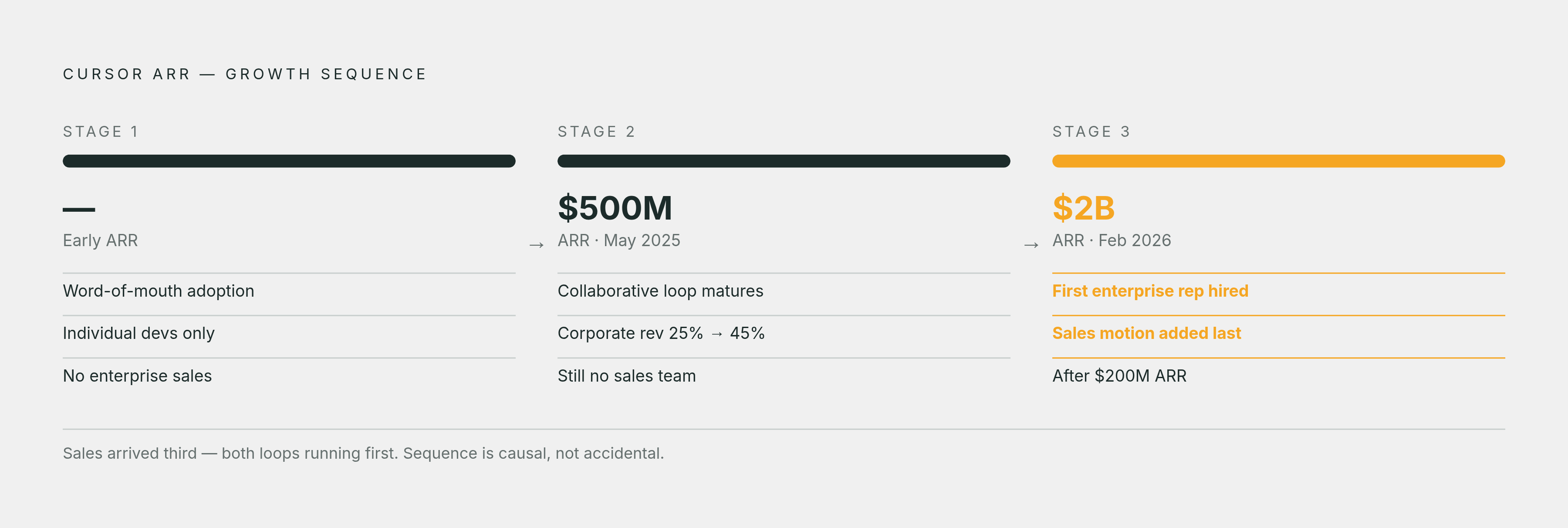
Cursor is the sharpest recent example of a collaborative loop turning into an enterprise business almost by accident. Individual developers adopted it on their own, and corporate revenue grew from roughly a quarter of the business in late 2024 to something close to 45% by the time the company hit $1 billion in ARR. Cursor didn't hire its first enterprise sales rep until it was well into its growth trajectory, past the $200 million ARR mark according to available reporting. The internal loop had already built the enterprise demand; sales just showed up to close it.
The activation moment that makes either loop possible
Neither loop fires without activation, and activation is reportedly the single metric most predictive of whether a free user ever becomes a paying one. A user who hasn't hit the moment where the product proves its worth won't share an output and won't invite a teammate. The loop doesn't stall somewhere downstream. It never starts.
This is where most PLG motions quietly fail, and the failure is structural. Reports suggest 58% of B2B SaaS companies will run some form of PLG motion by 2026, but only 34% actually track activation as a defined metric. That gap means most of these companies are running loops, or trying to, with no way of knowing where they break.
Activation is the first time a user does something the product uniquely lets them do, something they'll want to repeat or tell someone else about. Benchmark data cited in SlashExperts' 2025 report puts leading PLG companies at activation rates between 20% and 40% for freemium and free trial products, with top performers clearing 50%. Even past that first hurdle, individual features have their own ceiling: Pendo's data shows newly launched features landing 20-30% adoption within the first 30 days inside already-active accounts, which says something sobering about how much of a product's surface most users never touch.
Speed matters as much as the moment itself. The strongest PLG companies get users to that first "aha" in around eight minutes, not a scheduled demo, not a multi-day drip sequence, and platforms like Userlens, an AI account intelligence tool that reads each customer's actual product usage and database state to hand them a grounded personal next step rather than a generic chart, exist precisely because most products stall in that gap before the window closes. If the activation event is meant to seed a loop, whether that's a shareable output or a teammate-facing action, it has to be designed into that same eight-minute window, not bolted on afterward as a separate feature.
What behavioral signals reveal whether a loop is actually running
Daily active users, page views, email opens: none of these tell you whether a loop has fired. They measure whether someone showed up, not whether the product spread because of what they did while they were there. Treating engagement metrics as proof of a working loop is the single most common measurement mistake in PLG reporting, and it's worth naming as a mistake rather than a judgment call, because the two questions genuinely don't overlap.
For an external loop, the signals to watch are concrete. Are new signups arriving through a shared artifact, a link, a doc, a form, rather than through paid or organic search? Is direct traffic and word of mouth growing as a share of new signups? In at least one documented PLG motion, 40% of signups came from word of mouth alone. And how long is the gap between someone receiving a shared artifact and actually signing up? A short gap means the artifact delivered value fast enough that friction never had a chance to build.
For a collaborative loop, the tells are different. Seat expansion happening inside accounts without a sales rep pushing it is the clearest one, so the ratio of accounts that grow organically versus accounts that need a nudge is worth tracking on its own. Invite and assign events in product telemetry matter too: who sent the invite, how fast the invitee activated, whether both people came back a second time. Team-size cohorts settle the question outright. Accounts with more seats that retain longer and expand faster are proof the collaborative loop isn't theoretical; accounts that don't show that pattern mean the loop exists on a slide deck and nowhere else.
A working PLG motion at growth stage, somewhere between 1,000 and 50,000 monthly active users, tends to run on five metrics together: activation rate, time-to-first-value, feature adoption rate, onboarding completion rate, and retention rate. None tells the whole story alone, but together they show where a loop is breaking down.
Product-qualified-lead infrastructure sits between these signals and revenue. A functioning PQL system tracks activation milestones, usage depth, expansion signals, and feature adoption together, and PQL-driven funnels reportedly convert at 25-30%, compared with 5-10% for unscored leads. That gap only holds if the underlying telemetry is clean, which is a bigger lift than it sounds.
Net revenue retention above 130% is a threshold top PLG performers reach when within-account expansion is outrunning churn, and it is one of the clearest financial signals that a growth motion is compounding. One user sharing an output followed by one new signup proves nothing on its own. That's correlation at the individual level, and the right unit of measurement is the cohort, not the anecdote.
Where behavioral guidance accelerates loops that are already structurally sound
Behavioral guidance doesn't create a loop that isn't there. It removes friction from a loop already built into the product but stalling at a known point: an activated user who never shares, an invitee who never activates. Point automation at a product with no structural loop, and all that gets built is scheduled messaging dressed up with a personalization token; plenty of teams buy the tooling before they've confirmed the loop exists.
The shift that makes guidance useful is moving off the calendar and onto the event, such as a first login, a completed task, a usage milestone, or a stretch of inactivity. Those signals should decide timing, not a day-three, day-seven, day-thirty drip built around nothing in particular.
External loops have two clear intervention points. A user who's activated but hasn't shared anything yet can usually be identified from behavior alone, a first task completed with no share event logged, and the share action can be surfaced right there in context instead of in a separate email. Someone who viewed a shared artifact but never signed up is worth a re-engagement nudge while the context of what they saw is still fresh.
Collaborative loops have their own intervention points. A user running a workflow that's obviously collaborative by nature, bulk exports, multi-step review chains, shared reporting, but who hasn't invited anyone yet, is a strong candidate for a prompt to add a teammate, because the behavior already implies teammates exist. A new invitee who joined but never activated is the next link in the chain, and a stalled invitee breaks it. An existing user who has quietly stopped touching a collaborative feature they once used regularly is showing an early signal of seat contraction, well before a cancellation ever hits the dashboard.
The efficiency case for this kind of triggering is fairly stark. Behavior-triggered lifecycle messages generate close to 40% of email-attributed revenue in SaaS while accounting for only about 3% of total send volume, according to Omnisend's 2025 figures. That ratio exists because the message lands when the user actually needs it, not on a schedule someone set up months earlier.
AI-driven monitoring of login frequency, feature adoption, and task completion can catch loop-breaking patterns at a scale no human team could track manually. But the guardrail matters here: guidance should help the user get to their next useful step, not narrate their own activity back to them. A message that reads like the product is simply watching them work does more damage to trust than it does good for adoption, and that trade-off is the real risk of over-automating this layer.
Companies that have made this shift have found the same pattern: removing friction from the path to activation, before any sales motion begins, is what determines whether the loop compounds or stalls.
How to sequence loops as a product and team mature
Trying to build both loops at once before activation is even solved is the most common way teams burn their design and instrumentation budget on the wrong problem. Sequencing isn't a nice-to-have here, it's the whole game, and the answer to "which loop first" is not "it depends," whatever a consultant might tell you: it depends on one specific fact about the product, and that fact is knowable from day one.
At the earliest stage, roughly pre-product-market-fit or under 1,000 monthly active users, only three numbers matter: activation rate, time-to-first-value, and onboarding completion rate. Loop design before those three are under control is premature, full stop.
Which loop to build first after that depends entirely on what the product's core output actually is. If the thing the product produces is naturally public or cross-organizational, a booking link, a form, a shared document, the external loop sits closer to the surface and is cheaper to activate. If the product only delivers real value once multiple people inside the same company are using it together, communication tools, project management, shared analytics, the collaborative loop is the real growth engine and deserves the instrumentation first. Building the external loop first on a collaborative product is the mistake worth naming directly: it produces signups without producing accounts that expand, which looks like growth right up until retention numbers arrive and the plateau shows up on the board deck.
Once a product reaches growth stage, somewhere between 1,000 and 50,000 monthly active users with a PLG motion actually running, the full five-metric set applies: activation, time-to-first-value, feature adoption, onboarding completion, retention. That's also the point where the second loop can reasonably get layered on top of the first.
Cursor's own trajectory maps this sequence almost exactly. Individual developers adopted the product first, an external, word-of-mouth loop with no enterprise sales motion behind it at all. Corporate revenue then climbed organically from around 25% to roughly 45% of the business as the collaborative loop matured inside adopting companies. The company reported $500 million in ARR by May 2025 and $2 billion by February 2026, and didn't bring on an enterprise sales rep until deep into its growth curve. External loop first, collaborative loop second, sales motion third, not because someone planned it that way on a whiteboard, but because that's the order in which the mechanics actually became available to exploit.
Slack shows what it looks like when both loops run at once and reinforce each other. The internal collaborative loop drove expansion within individual companies, and Slack Connect then took that same mechanic across company boundaries, linking outside agencies and clients into the same channels. The 38.8 million daily active users reported in 2024 is what that combination looks like at scale.
When both loops run together, the effect on the business is additive in a specific way: external loops keep bringing new accounts in at the top, and internal loops keep deepening revenue inside every account already there. Net revenue retention above 130% is a threshold top PLG performers reach, and it tends to show up when growth is genuinely compounding, and it's a number no amount of paid acquisition alone can produce.